What people protect when they resist

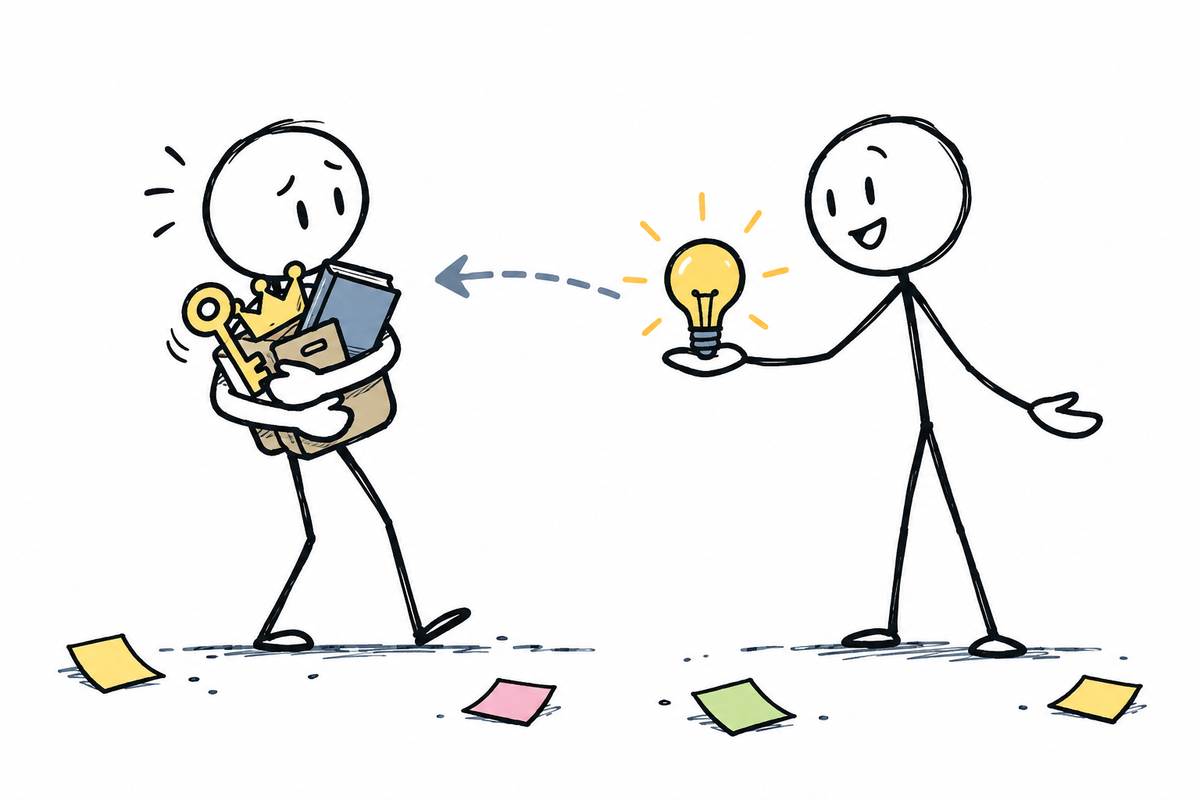
When a change doesn't move forward, the easy explanation is that people are resisting. But almost nobody resists for the sake of resisting. On what people protect when they resist, why convincing isn't the same as forcing, and what I learned when the change came for me.
People rarely resist an idea, they resist what that idea might take from them.
When a change doesn't move forward, the easy explanation is that people are resisting, as if it were a character flaw or an attitude problem, and that explanation lets you rest easy, because the problem stays on the other side.
But almost nobody resists for the sake of resisting. They resist because they're protecting something, and it's very rarely what they say in the meeting.
Imagine asking someone whether they'd turn down winning the lottery, which would also change their life, their routine, even the people they spend time with. Nobody would say no, because nobody resists a change they see working in their favor. The problem is that companies often don't put the change in anyone's favor, and then they're surprised nobody wants it.
What gets protected
I've seen several reasons, and they rarely come alone.
- The power of knowing how it's done: if I'm the one who knows the process, changing it means I stop being indispensable, because the new process doesn't just change how the work gets done, it changes who you have to ask.
- Relevance: similar to the previous one, but more personal, because what I know is my advantage, it took me years, and if the change makes it unnecessary, what's left of me in this place? That's why information sometimes doesn't flow, not out of carelessness, but because letting go of it feels like losing what makes you important.
- Ego: accepting that there's a better way can feel like accepting that what you did was wrong, even when that isn't the case, and even more so when you were the one who created the way it's done today.
- Habit: some people simply don't want to change, they've done it one way their whole life and it works for them. There's no need to look for a deeper reason, sometimes that's all it is.
- Doubt: some people don't believe it's possible, but they're open to being shown. They're different from all the others, and it's worth not confusing them.
In What Got You Here Won't Get You There, the author argues that people who have done well find it hard to change precisely because their way of doing things worked, and they don't always tell apart what made them succeed from what they did and succeeded in spite of. That's why the person who resists the most is often not the one doing it badly, but the one who did it well for years.
What convinces and what forces
When the doubt is honest, what moves it is almost never an argument, it's seeing something work. I've seen people go from resisting to supporting after a prototype, because they no longer had to imagine the change, they could touch it. John Kotter, in Leading Change, talks about short-term wins, visible results that take arguments away from the skeptics and turn the people in the middle into allies. A good prototype is exactly that.
But there's another kind of shift, the one from someone who accepts because they ran out of options. Everyone can see the improvement is real, the pressure comes from every direction, and the person ends up giving in, not because they were convinced, but because they got tired of standing alone against it.
From the outside they look the same, both say yes, but they're not the same. The one who was convinced pushes, the one who gave in goes along while someone is watching, and when attention moves on to something else, the old way has a quiet way of coming back. Kotter warns about something similar, that until a change becomes part of the culture it's fragile and tends to slip back, and that declaring it done too soon is one of the most common ways to lose it.
When the change comes for me
And here comes the part I find hardest.
I'm usually the one promoting change, and I support it easily when it's someone else's turn. But what happens when the change comes for me? When that change threatens to take away control, or touches my ego, or makes what I know worth less, I resist, sometimes without realizing it and sometimes knowing perfectly well. Afterwards I have to sit down, think it through, and accept that what's right is what's best for the place you're in, whether that's work, family or anything else. But it doesn't come naturally, keeping an open mind is something I have to do on purpose.
And that changed how I see the person who resists. If it's hard for me, and I'm on the side of change, how could it not be hard for someone who has spent years in that position, who built their place and their way of doing things there?
It's not about justifying resistance, it's about understanding it, and understanding it is useful for something practical.
So
Before asking yourself how to overcome resistance, ask what that person is protecting. If it's power, the change has to leave them a place. If it's relevance, their knowledge has to be part of the new thing, not what gets replaced. If it's doubt, show them something working. And if it's habit, be patient, because that isn't won in a meeting.
What doesn't work is treating them all the same, because resistance isn't one single thing.
And if it's hard to put yourself in their shoes, it helps to remember the last time you resisted something yourself.
When was the last time you resisted something that turned out to be good?
This is the third in a series. In the next one I get into what happens when resistance stops belonging to one person and starts belonging to a whole area, when the experiment steps onto someone's territory. If you want to follow the thread, follow me or subscribe to the newsletter.
Ideas taken from John Kotter's "Leading Change" and Marshall Goldsmith's "What Got You Here Won't Get You There", reworked from my own experience.